Hook Bend Angle Design: How Bend Geometry Affects Hookups
Two hooks can look nearly identical on a spec sheet and behave completely differently in the water.
The difference is often in the bend angle, the geometry that decides how the point enters the fish's mouth, how deep it seats, and how hard it is to shake loose.
For OEM buyers who commission custom hook runs, bend angle is one of the first parameters to lock down, because it is expensive to change after tooling is cut.
This guide explains what bend angle means, how it is measured, and how to specify it on your drawing.
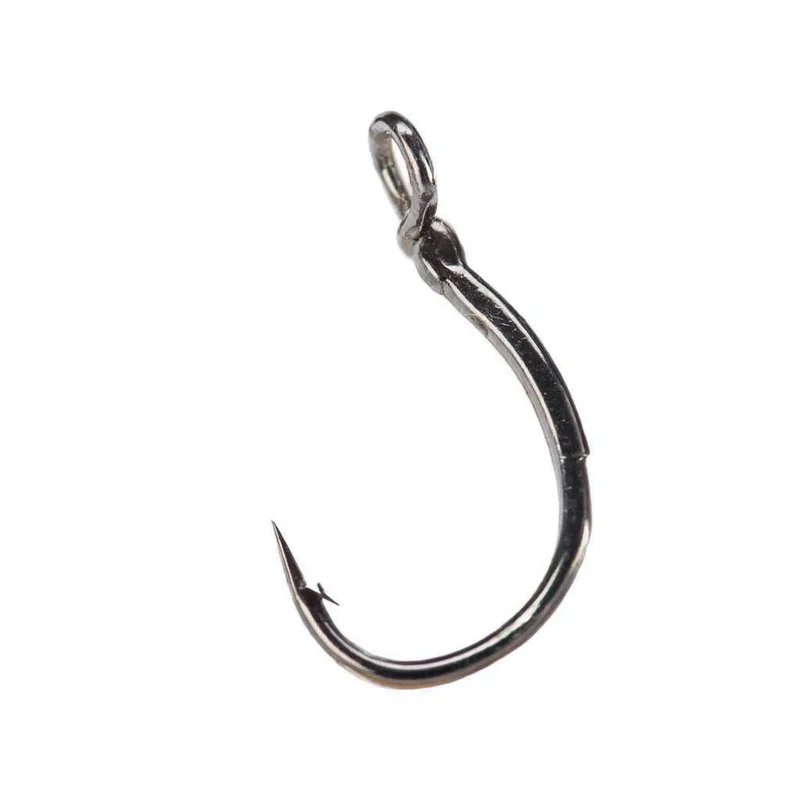
What Bend Angle Means
Bend angle describes the relationship between the hook shank and the hook point, viewed from the side. It is the angle that controls how the point presents itself when the hook is pulled. A straight, round bend keeps the point aligned with the shank.
A jig or offset bend angles the point away from the shank axis.
In practical terms, the bend angle decides two things: how easily the point catches the soft tissue at the corner of the mouth, and how the hook behaves once tension is applied.
The same wire, point, and finish can fish entirely differently just by changing this one dimension.
Bend Types in Common Use
Round Bend
The classic full-round bend keeps the point in line with the shank. It gives a wide gape, which suits live bait and worms, and it sets well when the fish takes the bait deeply.
It is the default geometry for most freshwater hooks and the easiest to specify with confidence.
Jig and Straight Bends
Jig hooks use a sharp, pronounced bend that throws the point forward, which suits vertical jigging where the hook is set with a sharp lift. Straight-bend jig patterns hold soft plastics securely.
The trade-off is a narrower gape, so they are not a universal replacement for round bends.
Offset Bends
An offset bend angles the point to one side of the shank plane. It improves hookup ratio on soft plastic rigs because the point catches on a different part of the mouth as the hook rotates.
The cost is a slightly higher chance of short strikes and a more complex manufacturing setup.
How Bend Angle Affects Hookup and Holding
The mechanics are simple to describe and hard to test, which is why most specifications are built on field experience rather than lab numbers. A point that presents at a shallow angle tends to skate across the mouth tissue instead of catching.
A point that presents too steeply can grab early but may not seat deep enough to hold a hard-fighting fish.
The reliable approach for a buyer is not to chase a single perfect angle, but to match the bend type to the rig and the species. Wide-gape round bends suit baits fished on the bottom. Offset and jig bends suit soft plastics and active presentations.
When in doubt, standardise on round bends for your core range, as the treble hook comparison explains, and add offset or jig patterns only where the target fishery demands them.
Specifying Bend Angle on Your Drawing
Bend angle is one of the dimensions that OEM buyers should write down explicitly, because it is easy for a factory to interpret a drawing differently. On your specification sheet include:
- Bend type name and a reference drawing, not just a verbal description.
- Point offset direction for offset hooks, stated as left or right from the shank plane.
- Bend radius where the bend matters, expressed in millimetres or as a ratio to wire diameter.
- Tolerance for the angle, typically plus or minus a few degrees. Tighter tolerances cost more, so specify only what your fishery needs.
If your team is not sure how to dimension the bend, the hook sizing guide explains how gauge, gap, and scale interact, and the tip geometry guide covers the point side of the equation. Together they form the core of a complete hook spec.
Sample and Production Verification
Because bend angle is hard to measure on a finished hook by eye, verify it at two points in the process. First, on the pre-production sample, measure the angle with a protractor or angle gauge and compare it to the drawing.
Second, on the first production batch, re-measure a small sample to confirm the tooling did not drift.
This two-point check matters more than most buyers expect. A small drift in bend angle changes hookup behaviour noticeably, and a batch that looks visually identical can be off-spec by enough to affect performance.
The same verification discipline applies to point geometry, which is covered in the point design guide.
FAQ
What is the most common hook bend for European fishing?
Round bends dominate European freshwater fishing, especially for carp and coarse species. Jig and offset bends are standard in specific niches such as soft plastic lures and predator fishing.
How is hook bend angle measured?
It is measured from the side view of the hook, as the angle between the shank axis and the direction the point presents. The measurement is usually taken with a protractor or an angle gauge on a pre-production sample.
Does bend angle affect hook strength?
Indirectly. A sharper bend creates more stress concentration at the bend, which can reduce strength in very thin wire. For standard wire diameters the effect is minor, but it is worth checking with your factory when going to an extreme bend.
Can I customise the bend angle on an OEM hook order?
Yes, but it affects tooling and minimum order quantities. Lock the bend geometry early in the process and verify it on the pre-production sample, because changing it after tooling is cut is expensive.
What tolerance should I specify for bend angle?
Plus or minus a few degrees is typical for most fisheries. Tighter tolerances increase cost, so only tighten the specification where your target fish and rig demand it.